



Kumbh Mela Haridwar 2021
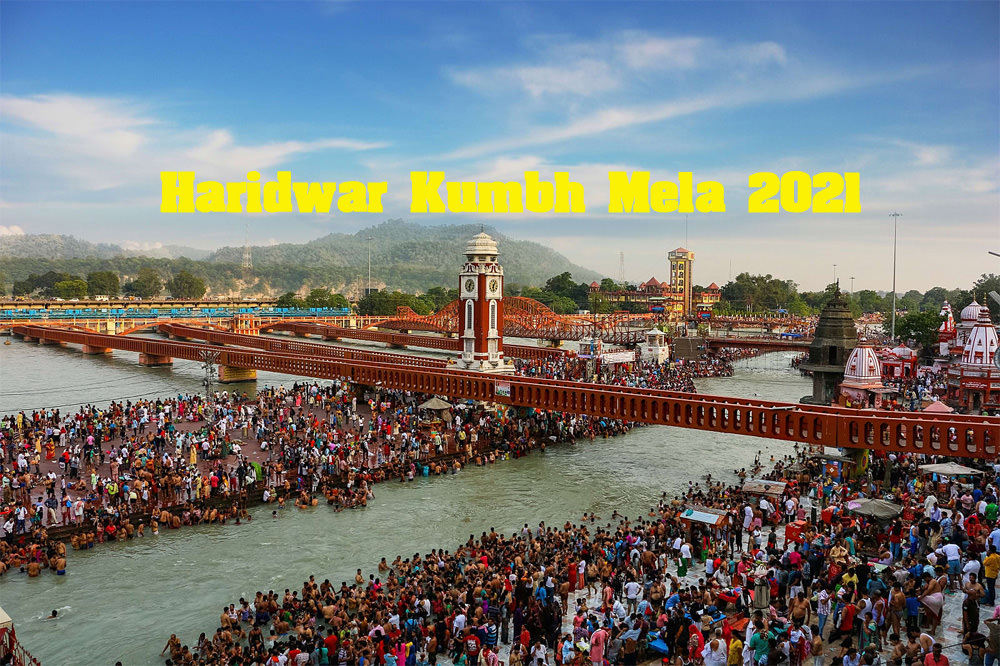
Kumbh Mela at Haridwar is one of the most auspicious religious mass pilgrimage event in Hinduism which occurs in every 12 years. It is also one of the largest peaceful gatherings of people anywhere in the world with millions of devotees and pilgrims partaking in the grand pilgrimage and take a dip in the holy river the Ganges to absolve all their sins.
The 2021 Maha Kumbh Mela will be held at Haridwar. Millions of devotees gather during the Maha Kumbh Mela in Haridwar. Auspicious holy dip is taken in River Ganges at the Har ki Pauri.
Spiritual gurus from all over the country come Kumbh Mela, to witness the auspicious Hindu cultural and religious festival. Kumbh Mela allows you to introspect and explore the spiritual side with the guidance of some of the most renowned spiritual guides.
Offers on Haridwar Tour Packages
Haridwar Kumbh Mela will be held from 1st to 30th April 2021
Preparations for Haridwar Mahakumbh 2021 are in the final stages. At present, arrangements regarding Mahakumbh are almost complete. With this, the Uttarakhand government has made it clear that the Maha Kumbh will be only 30 days. That is, Mahakumbh will be organized from April 1 to April 30. The administration is making preparations at its level to fulfill the arrangements of Kumbh.

Kumbh Mela 2021 Important Dates
The upcoming Kumbh Mela fair will be held at Haridwar. The dates for a pilgrimage to the Kumbh Mela are determined according to the Vikram Samvat calendar. The important bathing dates are given below.
Kumbh Mela 2021 will begin on 01 April 2021 and last till 30 April 2021.
| Important Dates for Snan/ Shahi Snan | ||
|---|---|---|
| 14 January 2021 | Makar Sankranti | Snan |
| 12 February 2021 | Mauni Amavasya | Snan |
| 16 February 2021 | Basant Panchami | Snan |
| 27 February 2021 | Maghi Poornima | Snan |
| 11 March 2021 | Maha Shivratri | First Shahi Snan |
| 12 April 2021 | Somvati Amamvasya | Shahi Snan |
| 13 April 2021 | Chaitra Shukla Pratipada | Snan |
| 14 April 2021 | Baisakhi | Shahi Snan |
| 21 April 2021 | Ram Navami | Snan |
| 27 April 2021 | Chaitra Purnima | Last Shahi Snan |
List of Bathing Ghats in Haridwar
- Har Ki Pauri
- Asthi Pravath Ghat
- Subhash Ghat
- Gau Ghat
- Sapth Sarover Kshetra Ghat
- Sarvanand Ghat
- Pantdweep Ghat
- Kangra Ghat
- Roode Bale Wala Ghat
- Ganesh Ghat
- Varagi Camp Ghat
- Sati Ghat
- Daksheshwar Ghat
- Singh Dwar Ghat
- Sita Ghat

Kumbh Mela Mythology with Haridwar
Haridwar is considered one of the Sapta Puri or ‘seven holy places’ according to Hinduism. The Kumbh fair traces its origin in the ancient legend of Samudra Manthan. When the battle of churning ocean between devas and asuras led to the creation of Amrit, the Lord Vishnu instructed Garuda to fly away with the elixir to keep it beyond the reaches of asuras.
Revered and sacred texts in Hinduism proclaim Haridwar to be one of the four places where drops of Amrit, the elixir of immortality were dropped from the Kumbh (pot) by Garuda, the celestial bird of Lord Vishnu.

Kumbh Rites and Rituals
Million of pilgrims congregate on the banks of river Ganges to take part in the ritual bathing. It is believed taking a dip in the holy water at the auspicious Kumbh Mela cleanse devotees of all their sins.
Another popular ritual at Kumbh Mela is the Peshwai procession which marks the arrival of members of different akharas and sect of sadhus. For instance, the Naga sadhus are the first to enter the holy water according to the fair tradition. Other rituals like devotional singing of hymns and religious discourse also take place at the Kumbh.
One another important aspect of Kumbh fair is the darshan of ascetics, sadhus and sages who usually nomadic, congregate at the Kumbh fair at large number. The Hindu pilgrims and devotees who visit Kumbh make sure to seek blessings and guidance from the sadhus towards their own spiritual life.
Kumbh Mela Frequently Asked Questions
Check out some of the most asked questions with detailed answers. It will help you to understand about Kumbh Mela.
Q: Do I have to register for Kumbh Mela in Haridwar? and where?
A: Yes and All details regarding registration for Kumbh Mela are given here.
Q: What is Kumbh Mela?
A: Kumbh Mela is the largest religious gathering of Hindus held four times over the course of 12 years at 4 different locations that are situated on the bank of the sacred rivers. Prayagraj (at the confluence of the Ganga, Yamuna and Saraswati Rivers), Ujjain (River Shipra), Haridwar (River Ganga) and Nasik (River Godavari) are the four destinations.
Q: What is Ardh Kumbh Mela?
A: The Ardh Kumbh Mela (Half Kumbh Mela) is held every 6 years in two different locations, Allahabad and Haridwar. Ardh means ‘half’ which is interpreted as the half of 12 years.
Q: What is Mahakumbh?
A: The Maha Kumbh Mela is held every 144 years at Prayagraj (Allahabad) only, after the completion of 12 Purna Kumbh Melas. The Purna Kumbh Mela is held every 12 years and hence, the Maha Kumbh Mela is held every 144 years.
Q: Why is Kumbh Mela celebrated? What is the importance of Kumbh Mela?
A: It is believed, the nectar from the pot fell at four locations - Prayagraj, Ujjain, Haridwar, and Nasik during an epic battle between the gods and the demons. At these four places, Kumbh Mela takes place. The Hindu devotees throng these places with a belief that a dip in the waters of the sacred rivers will wash away all their sins.
Q: What is Shahi Snan Dates?
A: Shahi snan is the central highlight of the Kumbh Mela and the most important part of the celebration. There are few dates known as royal bathing (Shahi snan), considered most auspicious for Naga Sadhus. Millions of devotees gather at Kumb Mela Location for taking the holy dip in the river.
Q: In which places is the Kumbh Mela celebrated?
A: The Kumbh Mela is held in Prayagraj (at the confluence of Ganga, Yamuna and Saraswati Rivers), Nasik (River Godavari), Ujjain (River Shipra) and Haridwar (River Ganga).
Q: How can be reach Haridwar What is the nearest airport, railway station and bus terminal to Kumbh Mela, Haridwar?
A: The nearest Airport to Haridwar is the Jolly Grant Airport in Dehradun (41 kms). The airport has direct flights operating from Dehradun to major cities like Delhi and Mumbai and connecting flights to all the cities of India. One can hire a cab from outside the airport to go to Haridwar.
Haridwar has its own railway station that connects it to the rest of the country. It enjoys good rail connectivity with the major cities of India like Delhi, Kolkata, Mumbai, Dehradun, Jaipur, Patna and many others.
Haridwar also enjoys good road connectivity with Delhi, Haryana, Uttar Pradesh, Punjab and Uttarakhand. Frequent state-run and private buses operate between these places.
You can check here: How to reach Haridwar for more information.
Q: What are Akharas?
A: The Akharas are the places of congregation for the saints. They were originally developed by Adi Shankarcharya in the 8th century and were divided into categories - Astradhari (intelligentsia) and Shastradhari (weapon-bearer). The Akharas are also learning centers where the devotees of Hinduism can learn about the various teachings and philosophies of the Hindu way of life as well as seek the blessings of the saints.
Q: How many Akharas take part in the Kumbh Mela?
A: Initially, there were 4 Akharas which would take part in the Kumbh Mela. But, due to many ideological differences, these 4 Akharas were further divided into 13 categories, mainly of Shaiv, Vaishnav and Udasin sects.
Q: Who are Naga Sadhus?
A: The Naga Sadhus are the followers of Lord Shiva. They don’t wear any clothes and live an ascetic life having relinquished all their desires for body, comfort and material.
Q: Where do Naga Sadhus live?
A: The Naga Sadhus live in the caves of Himalayas, away from the contact of human civilization and meditate there in order to seek enlightenment and salvation.
Q: Can we meet Naga Sadhus?
A: Yes, one can meet the Naga Sadhus in the Kumbh Mela. You can click their pictures, talk to them and get an insight into their lives and experiences after asking for their permission. However, if they refuse, then it is advised to respect their decision and leave them alone.
Q: Why don’t Naga Sadhus wear clothes?
A: The Naga Sadhus have given away all their desires for material and body and live an ascetic life in order to seek spiritual enlightenment and salvation. This is the reason behind them not wearing any clothes which are a symbol of attachment to the materialistic possessions of the world.
Q: Why do Naga Sadhus smear ashes (bhasma) on their bodies?
A: The Naga Sadhus smear their bodies with the ashes of the burned dead bodies to signify their devotion to the Lord Shiva.
Q: I have heard that motorized vehicles are ban during Kumbh Mela. Is this true?
A: Yes, Motorized vehicles are banned during main bathing dates (Shahi snan). Millions of people are expected to visit Sangam during the bathing date, most of the border roads will be blocked to enter into the city. Even if you try to reach from the airport or station it will take several hours to reach your destination.
Q: Is there any restriction on food and drinks at Kumbh Mela?
A: Yes, being a very sacred place and event, it is not allowed to have non-vegetarian meal of any kind (no meat, fish, eggs, etc.) It is also not allowed to consume any alcoholic drinks.
Q: Can you please let us know things to do or activities during during Kumbh mela?
A: During Kumbh Mela you can do the following activites:
- Take a Dip in the Holy Ganga.
- Visit an Akhadas and Meet the Naga Sadhus
- Listen to Kathas, Participate in Kirtans, enjoy the riverside Ganga aarti
- Explore Haridwar City, Market and Eat at a Bhandaras
- Visit the ancient temples of the city
- Buy Souvenirs and Do shopping in Haridwar
If you can extend your holidays then you can explore the following as well:
- Visit Rishikesh - Do Rafting in Rishikesh
- Visit Chopta and Do the trek of Tungnath and Chandrashila
- Visit Dhanaulti and Kanatal
- Visit Tehri Lake and enjoy water sports in Tehri
Help us to Add More About Kumbh Mela, Haridwar!
If you know more about Haridwar Kumbh Mela, which is not listed above then, Kindly share the details at helpdesk@eutn.in
If you find any inappropriate information about Kumbh Mela 2021 listing do mail us in the same email id, so that we can update/remove it to provide the best information to our visitors. Thank You!


